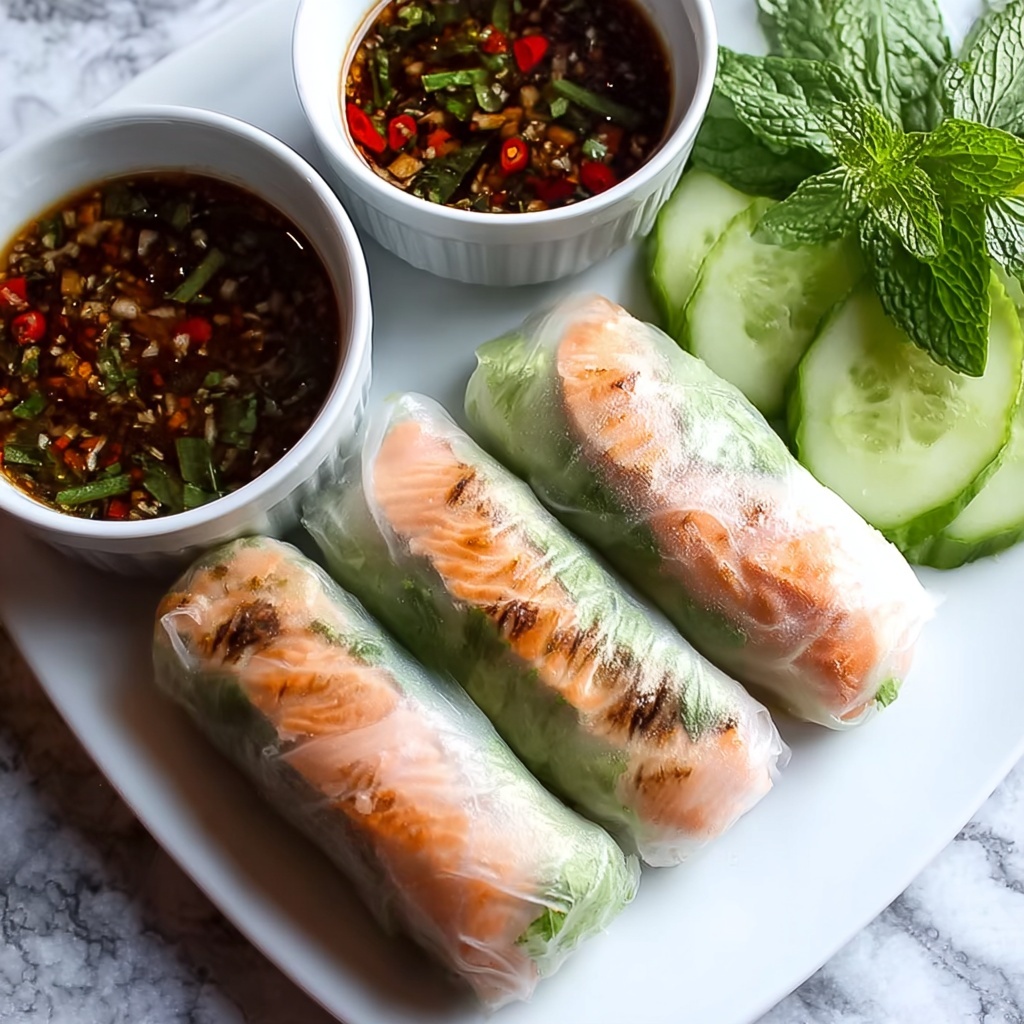
If you’re craving a fresh, flavorful dish that perfectly balances lightness with satisfying protein, this Vietnamese Baked Salmon Spring Rolls Recipe is an absolute showstopper. Combining tender, flaky salmon baked to perfection with crisp, vibrant vegetables and fragrant herbs wrapped delicately in rice paper, these spring rolls offer a burst of authentic Vietnamese flavors in every bite. Whether you’re serving them as a light lunch, impressive appetizer, or healthy snack, this recipe brings together a harmony of textures and tastes that will make these spring rolls your new favorite go-to dish.
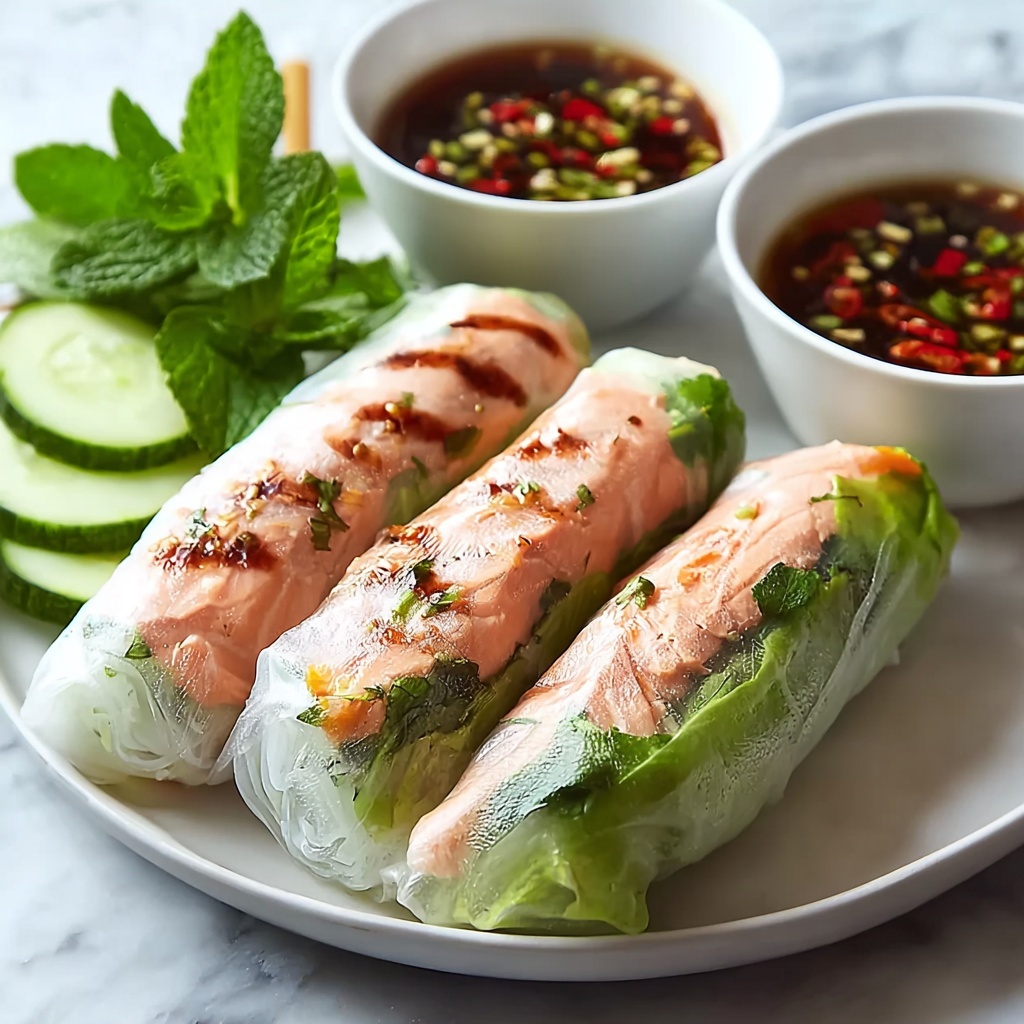
Ingredients You’ll Need
Every ingredient in this Vietnamese Baked Salmon Spring Rolls Recipe is simple yet essential for balancing textures, flavors, and colors. From the rich salmon to the refreshing herbs, each component works together to create a delightful eating experience.
- Salmon fillets (4 pieces, 4 ounces each): Provides a hearty, protein-packed base with rich flavor and flaky texture after baking.
- Olive oil (1 tablespoon): Adds a smooth richness that helps keep the salmon moist and flavorful.
- Soy sauce (1 tablespoon): Brings an umami depth and subtle saltiness that enhances the salmon’s natural flavors.
- Fish sauce (1 teaspoon): Adds authentic Vietnamese tang and saltiness that make the dish truly sing.
- Honey (1 teaspoon): Balances savory notes with a touch of gentle sweetness.
- Garlic, minced (1 clove): Infuses the marinade with aromatic sharpness.
- Freshly ground black pepper (1/2 teaspoon): Lends a gentle heat and complexity.
- Rice paper wrappers (8 sheets): The delicate vessel that wraps all the fresh ingredients and allows you to see the vibrant filling inside.
- Rice vermicelli noodles (4 ounces, cooked and cooled): Provides a light, chewy texture that complements the salmon and veggies.
- Butter lettuce leaves (1 cup): Adds crispness and a mild, buttery flavor that keeps the rolls refreshing.
- Shredded carrots (1/2 cup): Brings bright color, natural sweetness, and crunch.
- Julienned cucumber (1/2 cup): Offers coolness and moisture to balance the richness.
- Fresh mint leaves (1/4 cup): Bursts of herbal freshness and vibrancy.
- Fresh cilantro leaves (1/4 cup): Adds a citrusy, pungent lift classic to Vietnamese cuisine.
- Fresh basil leaves (1/4 cup): Imparts a sweet, aromatic complexity that ties the whole roll together.
- Sesame seeds (1 tablespoon, optional): Adds a subtle nutty crunch for texture contrast.
- For the dipping sauce: Hoisin sauce (1/4 cup), peanut butter (1 tablespoon), rice vinegar (1 teaspoon), warm water (1-2 tablespoons), and chili garlic sauce (1 teaspoon, optional) combine to make a creamy, tangy, slightly spicy complement to each bite.
How to Make Vietnamese Baked Salmon Spring Rolls Recipe
Step 1: Marinate and Bake the Salmon
Begin by preheating your oven to 400°F and lining a baking sheet with parchment paper for easy cleanup. In a small bowl, whisk together the olive oil, soy sauce, fish sauce, honey, minced garlic, and freshly ground black pepper to create a flavorful marinade. Place your salmon fillets on the prepared baking sheet and brush each piece generously with the marinade. Bake for 10 to 12 minutes, or until the salmon flakes easily when tested with a fork. This step is where the magic happens—baking seals in the succulent flavors while keeping the fish tender.
Step 2: Prepare the Dipping Sauce
While the salmon bakes, mix the dipping sauce by whisking together the hoisin sauce, peanut butter, rice vinegar, and warm water until smooth and creamy. For those who like a little heat, adding chili garlic sauce is a fantastic option to amp up the flavor profile. Set this aside so the flavors can meld together beautifully by the time you’re ready to serve.
Step 3: Soften the Rice Paper Wrappers
Fill a shallow dish with warm water. Submerge one rice paper wrapper for 10 to 15 seconds, just until it softens and becomes pliable—being careful not to oversoak to prevent tears. Lay each softened wrapper flat on a clean surface, ready for assembly. This step is quick but key for wrapping your spring rolls perfectly without any breakage.
Step 4: Assemble the Spring Rolls
Place one butter lettuce leaf in the center of your softened rice paper. Layer on a small handful of cooked vermicelli noodles, shredded carrots, julienned cucumber, and a mix of mint, cilantro, and basil leaves for that authentic Vietnamese brightness. Top it all off with generous flakes of the baked salmon. If you like, sprinkle sesame seeds over the filling for an added crunch. Fold in the sides of the rice paper and gently but firmly roll from the bottom upward to create a tight, secure roll. Repeat with the remaining wrappers and filling.
How to Serve Vietnamese Baked Salmon Spring Rolls Recipe
Garnishes
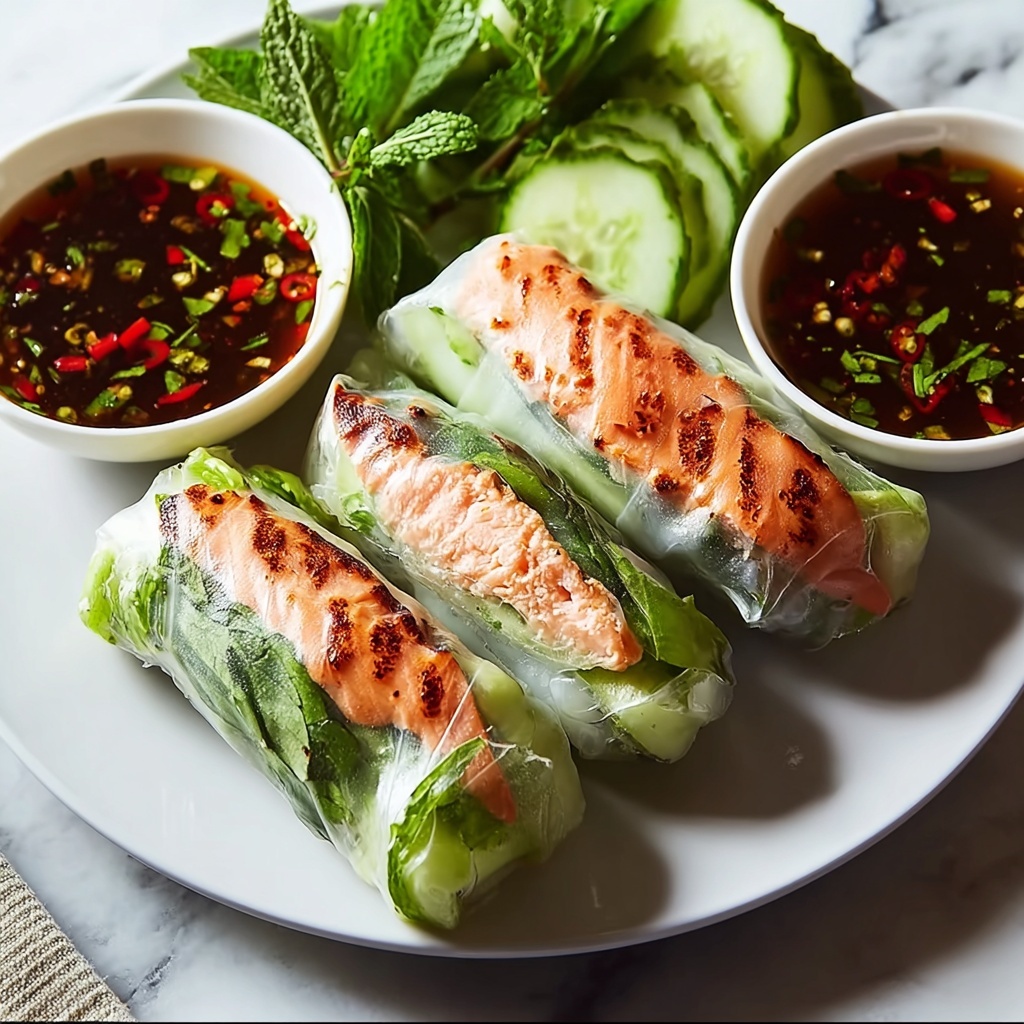
Finishing with fresh garnishes instantly elevates your Vietnamese Baked Salmon Spring Rolls Recipe. A sprinkle of sesame seeds on top adds visual appeal and subtle nutty flavor. You can also zest a bit of lime over the plate or place extra fresh herb sprigs nearby for guests to add as they wish—this adds an inviting, aromatic touch to your presentation.
Side Dishes
These spring rolls shine on their own, but if you want to build out your meal, pair them with light, refreshing sides like a crisp cucumber salad dressed with lime and chili flakes or a bowl of fragrant pho broth. Vietnamese pickled vegetables make an excellent palate cleanser between bites and complement the rolls’ delicate layers beautifully.
Creative Ways to Present
For an impressive spread, serve the spring rolls on a large wooden platter with small bowls of the peanut hoisin dipping sauce arranged around for easy sharing. Alternatively, try stacking the rolls vertically or slicing them in half diagonally to showcase the colorful fillings inside. Adding edible flowers or microgreens can bring a stunning, restaurant-style finish that’s sure to wow your guests.
Make Ahead and Storage
Storing Leftovers
If you have any leftovers, keep the spring rolls tightly wrapped in plastic wrap to prevent the rice paper from drying out. Store them in an airtight container in the refrigerator and enjoy within a few hours for the best texture and taste, as the rice paper can become chewy over time.
Freezing
Because of the fresh vegetables and rice paper, freezing is not recommended for this Vietnamese Baked Salmon Spring Rolls Recipe, as it can damage the delicate textures. Instead, it’s best to prepare just what you need to enjoy immediately.
Reheating
Reheating spring rolls is tricky since they’re best served fresh. If needed, gently warm the salmon filling separately in a pan or microwave, then reassemble into fresh rice paper if available. However, enjoying these spring rolls right after making them guarantees the most delightful eating experience.
FAQs
Can I use other types of fish instead of salmon?
Absolutely! While salmon provides a rich flavor and flaky texture, you can substitute with other firm fishes like cod or tilapia. Just adjust baking time as thinner fillets may cook faster.
Is it necessary to bake the salmon, or can I use raw fish?
This recipe specifically calls for baked salmon because it adds a warm, tender component that balances well with the fresh vegetables and herbs. Using raw fish turns it into a different dish like sushi rolls, which requires different preparation.
Can I make these spring rolls gluten-free?
Yes, as long as you use gluten-free soy sauce or tamari and ensure your other sauces and ingredients don’t contain gluten, these spring rolls are naturally gluten-free.
What if I don’t have rice vermicelli noodles?
If rice vermicelli isn’t available, you can omit it or substitute with thin glass noodles or even shredded cabbage for extra crunch. Just make sure the texture contrasts remain.
How long do the spring rolls keep once assembled?
They’re best eaten immediately, but you can store them wrapped tightly in plastic wrap in the fridge for up to 4 hours. Beyond that, the rice paper tends to harden or become soggy, losing its delicate texture.
Final Thoughts
This Vietnamese Baked Salmon Spring Rolls Recipe is truly one of those dishes you’ll find yourself craving over and over. It marries simplicity with incredible fresh flavors and elegant presentation, perfect for sharing with friends or enjoying a light, nourishing meal. Give it a try—you’ll love how effortlessly these spring rolls come together and how every bite bursts with vibrant, satisfying taste.
Print
Vietnamese Baked Salmon Spring Rolls Recipe
- Prep Time: 25 minutes
- Cook Time: 12 minutes
- Total Time: 37 minutes
- Yield: 8 spring rolls
- Category: Main Course
- Method: Baking
- Cuisine: Vietnamese
Description
These Vietnamese Baked Salmon Spring Rolls combine tender, flavorful baked salmon with fresh herbs, crisp vegetables, and vermicelli noodles wrapped in delicate rice paper. Perfect as a light main course or appetizer, they are served with a creamy peanut-hoisin dipping sauce that complements the vibrant flavors.
Ingredients
Salmon and Marinade
- 4 salmon fillets (about 4 ounces each)
- 1 tablespoon olive oil
- 1 tablespoon soy sauce
- 1 teaspoon fish sauce
- 1 teaspoon honey
- 1 clove garlic, minced
- 1/2 teaspoon freshly ground black pepper
Spring Rolls
- 8 rice paper wrappers
- 4 ounces rice vermicelli noodles, cooked and cooled
- 1 cup butter lettuce leaves
- 1/2 cup shredded carrots
- 1/2 cup julienned cucumber
- 1/4 cup fresh mint leaves
- 1/4 cup fresh cilantro leaves
- 1/4 cup fresh basil leaves
- 1 tablespoon sesame seeds (optional)
Dipping Sauce
- 1/4 cup hoisin sauce
- 1 tablespoon peanut butter
- 1 teaspoon rice vinegar
- 1 to 2 tablespoons warm water (to thin)
- 1 teaspoon chili garlic sauce (optional)
Instructions
- Preheat and Marinate: Preheat the oven to 400°F and line a baking sheet with parchment paper. In a small bowl, whisk together olive oil, soy sauce, fish sauce, honey, minced garlic, and black pepper. Place salmon fillets on the prepared baking sheet and brush them generously with the marinade.
- Bake the Salmon: Bake the salmon for 10 to 12 minutes, or until it flakes easily with a fork. Remove from the oven and let it cool slightly, then break into large flakes for filling the rolls.
- Prepare the Dipping Sauce: In a bowl, whisk together hoisin sauce, peanut butter, rice vinegar, warm water, and optional chili garlic sauce until smooth and creamy. Adjust thickness by adding more warm water as needed.
- Soften Rice Paper Wrappers: Fill a shallow dish with warm water. Dip one rice paper wrapper into the water for 10 to 15 seconds until softened but still pliable. Lay it flat on a clean surface.
- Assemble Spring Rolls: On the centered softened rice paper, place a lettuce leaf, followed by a small handful of rice vermicelli noodles, shredded carrots, julienned cucumber, fresh mint, cilantro, basil leaves, and a generous portion of flaked salmon. Sprinkle sesame seeds if desired.
- Roll the Spring Rolls: Fold in the sides of the rice paper and roll tightly from the bottom to the top to encase all the fillings securely.
- Serve: Repeat the assembly with remaining wrappers and filling ingredients. Serve the spring rolls immediately with the prepared peanut-hoisin dipping sauce.
Notes
- Do not oversoak the rice paper wrappers as they can tear easily; dipping for 10 to 15 seconds is sufficient.
- These spring rolls are best eaten fresh but can be wrapped tightly in plastic wrap and refrigerated for a few hours before serving.
- For a lighter, tangier dipping sauce, substitute the peanut sauce with classic nuoc cham (Vietnamese fish sauce dipping sauce).