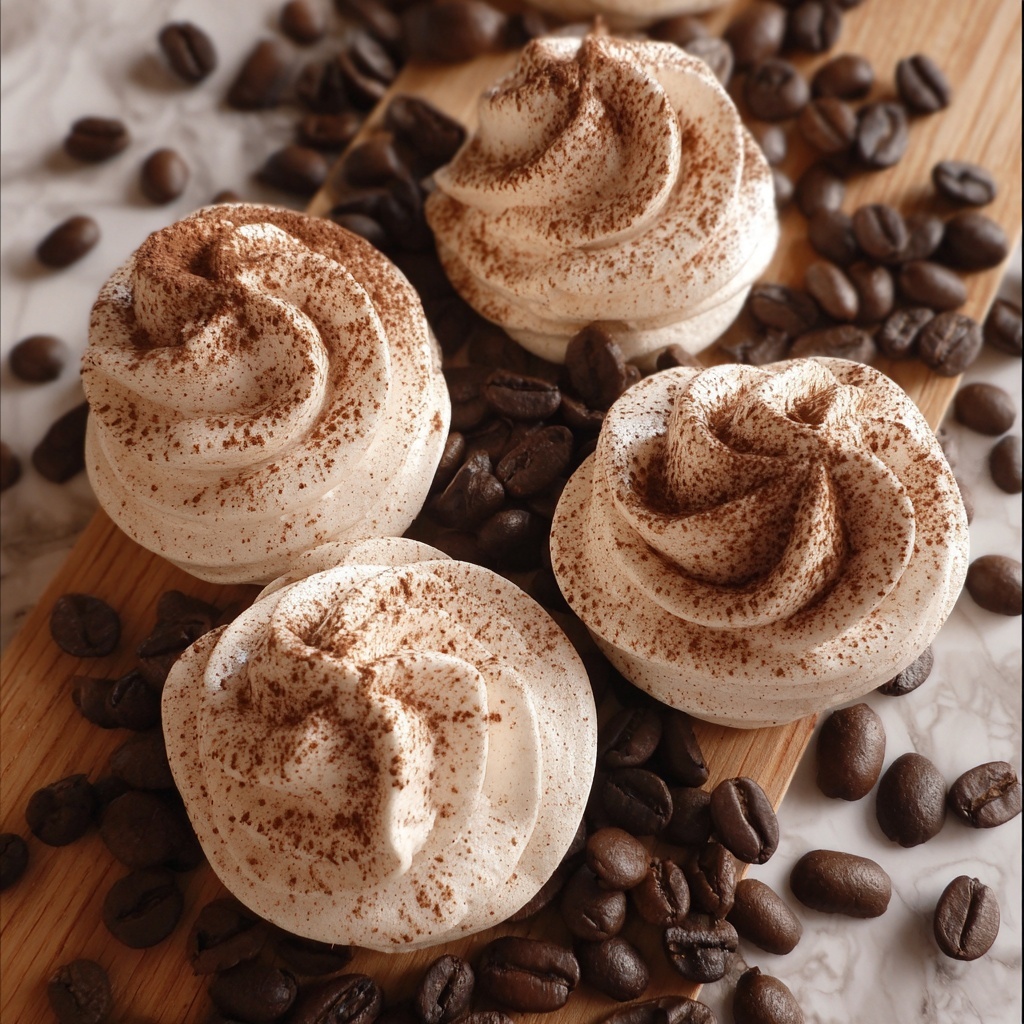
If you adore delicate, melt-in-your-mouth treats with a fragrant coffee twist, then this Espresso Meringue Cookies Recipe is about to become your new go-to. These airy, crisp little delights combine the bold essence of espresso with the ethereal lightness of perfectly whipped egg whites, creating a cookie that’s as beautiful as it is delicious. They’re incredibly simple but packed with flavor, making them an irresistible companion to your afternoon cup of coffee or a charming finish to any meal.
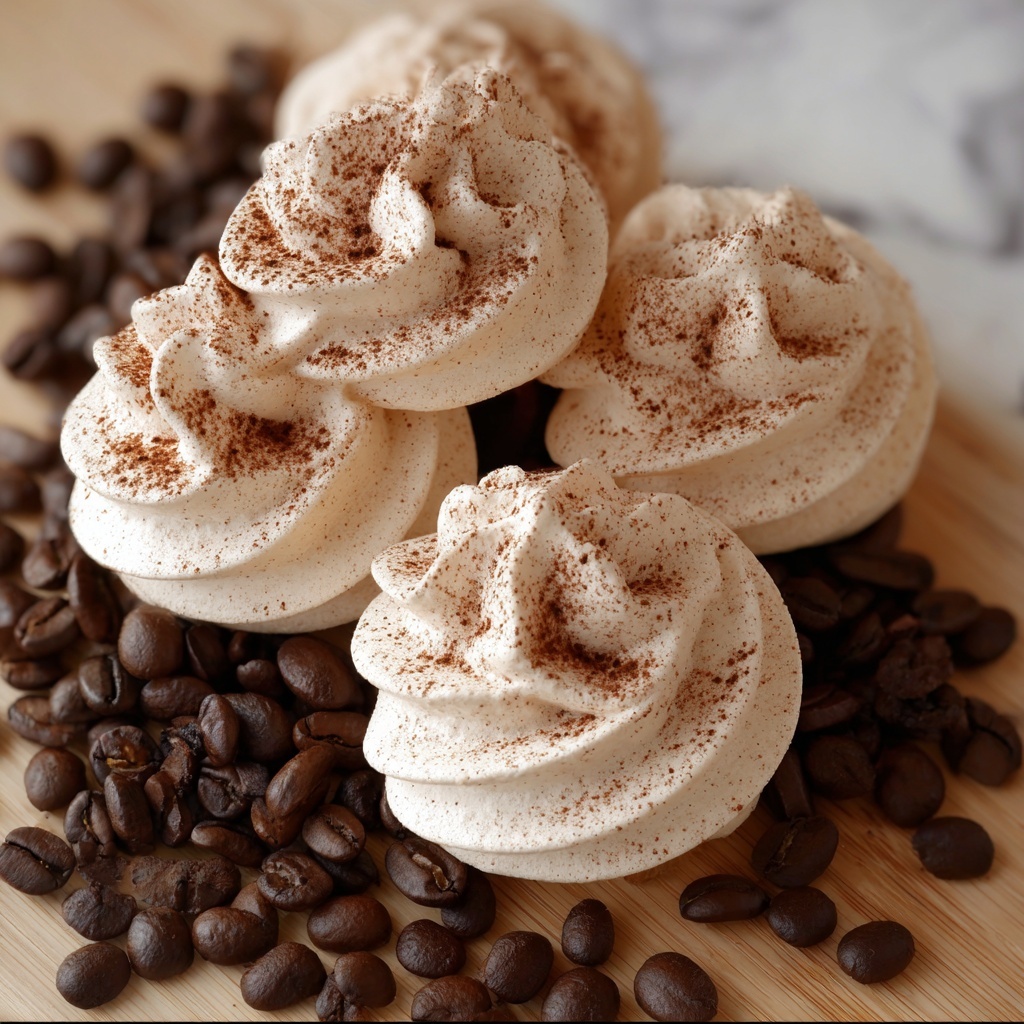
Ingredients You’ll Need
Gathering simple, quality ingredients is key to nailing this Espresso Meringue Cookies Recipe. Each component plays a vital role in creating that signature texture and flavor—from the shimmering sugar for sweetness and structure to the espresso powder that infuses every bite with a rich coffee aroma.
- 2 large egg whites, at room temperature: This is the base of your meringue; room temperature whites whip up better for that fluffy texture.
- 1/4 teaspoon cream of tartar: Helps stabilize the egg whites and keeps your meringue firm and glossy.
- 1/4 teaspoon vanilla extract: Adds a subtle warmth and balances the espresso’s bitterness.
- 1/2 cup granulated white sugar: Sweetens the meringue while giving it a crisp finish when baked.
- 2 teaspoons espresso powder: The star ingredient that delivers a robust coffee flavor without adding moisture.
How to Make Espresso Meringue Cookies Recipe
Step 1: Preheat Oven and Prepare Baking Sheet
First things first, preheat your oven to a low 200°F (93°C). Line a baking sheet with parchment paper to prevent sticking and to ensure your meringues bake evenly. This slow baking method is essential for drying out the cookies rather than browning them.
Step 2: Prepare Egg Whites
Start with cold eggs to separate them more easily, then let the egg whites sit at room temperature for about 30 minutes. This step helps achieve the maximum volume when whisking, leading to those light, airy meringues we all love. Make sure your mixing bowl and beaters are perfectly clean and dry because even a hint of fat can prevent the whites from whipping properly.
Step 3: Beat Egg Whites to Frothy Stage
Using an electric mixer, whip the egg whites on medium speed until they become frothy—this is your foundation. You’ll notice the transformation from liquid to foam as tiny air bubbles form, ready to be expanded and stabilized with the next steps.
Step 4: Add Cream of Tartar and Vanilla
Sprinkle in the cream of tartar and add the vanilla extract, then continue beating until you see soft peaks forming. This means when you lift the beaters, peaks rise but gently fall back. This stage ensures your meringue develops structure and a lovely aromatic hint before sweetening.
Step 5: Gradually Incorporate Sugar
Now comes the sweetening and stiffening moment. Add your sugar slowly, one tablespoon at a time, making sure it dissolves completely before adding the next. This patient process, beaten on medium-high speed for about 5 to 7 minutes, will give you glossy, stiff peaks that hold firm and promise that perfect crunchy texture after baking.
Step 6: Fold in Espresso Powder
Gently fold the espresso powder into your meringue using a spatula. Be careful to incorporate it evenly without deflating the delicate foam. The dry espresso powder gives that unmistakable coffee flavor without affecting the volume or texture.
Step 7: Pipe or Scoop Meringue onto Baking Sheet
Transfer your mixture to a piping bag for beautiful swirls, or use a spoon to dollop small mounds on the parchment-lined baking sheet. Keep them evenly spaced because these cookies won’t spread much.
Step 8: Bake Slowly
Bake your cookies for 1.5 to 2 hours at low heat. The goal here is to dry them out completely without browning, so patience is key. Your kitchen will start to fill with a lovely coffee aroma that’s hard to resist.
Step 9: Dry in Oven Overnight
Turn off the oven and leave your meringues inside for at least 4 hours or preferably overnight. This gentle drying process ensures a perfectly crisp exterior and a melt-in-your-mouth center.
Step 10: Store Properly
Finally, once cooled, store your Espresso Meringue Cookies in an airtight container at room temperature to keep their delicate crunch intact. Now, get ready to enjoy these heavenly bites whenever the craving strikes.
How to Serve Espresso Meringue Cookies Recipe
Garnishes
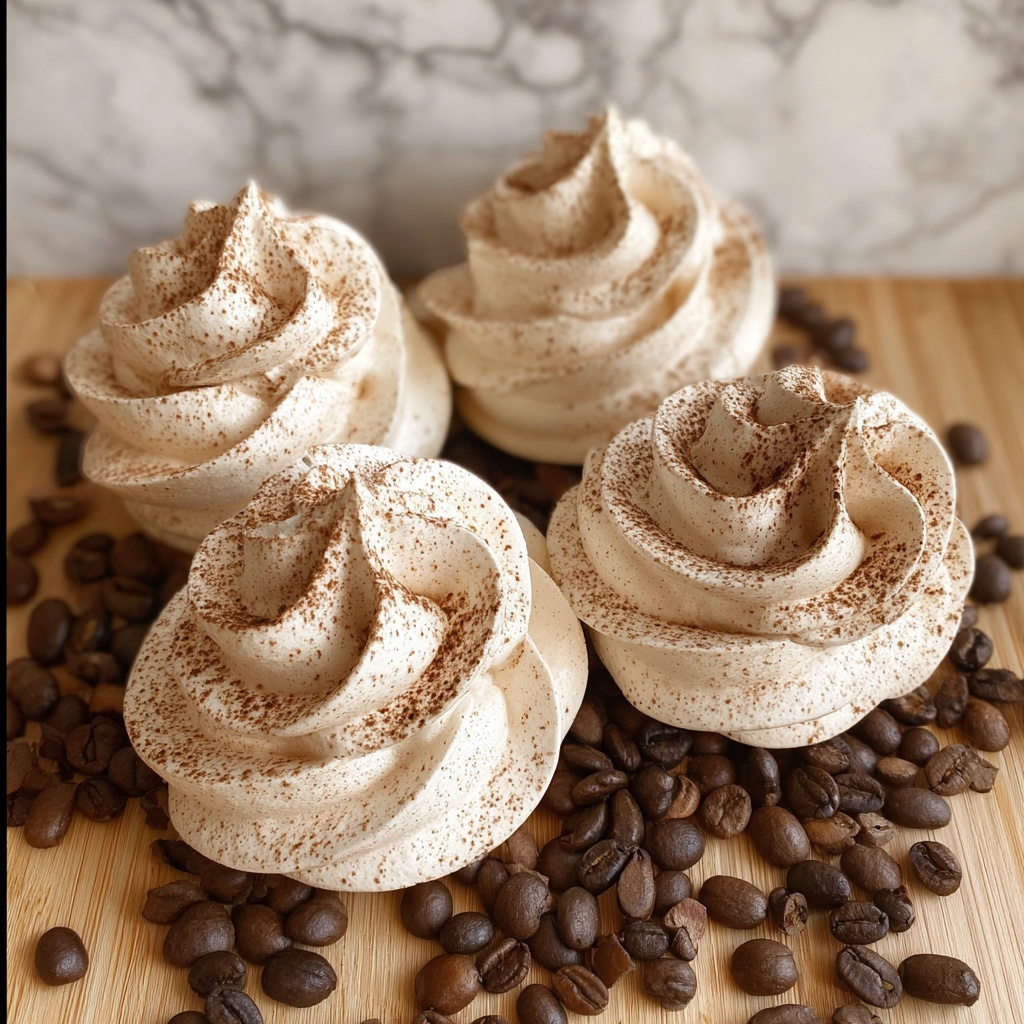
Sprinkle a tiny pinch of cocoa powder or finely grated dark chocolate on top of each cookie before serving for an extra touch of elegance and flavor that pairs wonderfully with the coffee essence.
Side Dishes
These cookies make a perfect companion to a creamy cappuccino or a smooth latte. For a special treat, serve alongside a small glass of chilled vanilla cream or mascarpone to offset the robust espresso flavor.
Creative Ways to Present
Stack your meringues artistically on a dessert platter with fresh berries and mint leaves for a visually stunning presentation. You can also sandwich two cookies with a thin layer of chocolate ganache or whipped cream for delightful espresso meringue cookie bites!
Make Ahead and Storage
Storing Leftovers
Store leftover cookies in an airtight container at room temperature for up to a week. Make sure to keep them away from moisture to maintain their crisp texture and prevent them from becoming sticky.
Freezing
You can freeze these meringue cookies by placing them in a freezer-safe container with parchment paper between layers. When stored correctly, they’ll hold their flavor and crunch for up to a month.
Reheating
Instead of traditional reheating, it’s best to enjoy these cookies as they are. If you prefer a slightly warmed cookie, pop them in a low oven (200°F) for a few minutes to revive their crispness without melting them.
FAQs
Can I use instant coffee instead of espresso powder?
Instant coffee can be used in a pinch, but espresso powder provides a stronger, more authentic coffee flavor suited for this recipe. The intensity is generally better balanced in espresso powder.
Why do my meringue cookies crack after baking?
Meringue can crack if your oven temperature is too high or if the cookies cool too quickly. Baking at 200°F and drying them slowly in the switched-off oven helps prevent cracking by allowing gentle cooling.
Can I make these cookies vegan?
Traditional meringue requires egg whites, so making vegan versions involves substitutes like aquafaba. However, this recipe relies on egg whites for perfect texture, so alterations may affect the outcome.
How do I know when the sugar is fully dissolved in the meringue?
Rub a bit of the meringue between your fingers; it should feel smooth, not gritty. Fully dissolved sugar is key to getting glossy, stiff peaks without graininess.
Why is cream of tartar important in this recipe?
Cream of tartar stabilizes the egg whites by increasing their acidity. This helps form firm peaks and creates a longer-lasting, glossy meringue that holds its shape beautifully.
Final Thoughts
Trust me, once you taste these espresso-infused clouds of sweetness, the Espresso Meringue Cookies Recipe will quickly earn a permanent spot in your baking repertoire. They’re light, crisp, and bursting with coffee goodness—perfect for any occasion that calls for a little elegance and a lot of flavor. Give this recipe a try, and enjoy the warm smiles that come with sharing such a delightful treat!
Print
Espresso Meringue Cookies Recipe
- Prep Time: 40 minutes
- Cook Time: 2 hours
- Total Time: 6 hours 40 minutes
- Yield: 16 servings
- Category: Dessert
- Method: Baking
- Cuisine: American
- Diet: Gluten Free
Description
Delight in these light and crispy Espresso Meringue Cookies, perfectly blending the airy texture of classic meringues with a rich espresso flavor. Ideal as a sophisticated treat to accompany your coffee or as a sweet, delicate snack any time of the day.
Ingredients
Main Ingredients
- 2 large egg whites, at room temperature
- 1/4 teaspoon cream of tartar
- 1/4 teaspoon vanilla extract
- 1/2 cup granulated white sugar
- 2 teaspoons espresso powder
Instructions
- Preheat Oven: Preheat the oven to 200°F (93°C) and line a baking sheet with parchment paper to prevent the meringues from sticking.
- Prepare Egg Whites: Ensure your mixing bowl and beaters are completely clean and dry. Separate the eggs while cold, then let the egg whites sit out for 30 minutes to reach room temperature for better volume when beaten.
- Beat Egg Whites: Using an electric mixer, beat the room temperature egg whites on medium speed until they become frothy and start to form soft peaks.
- Add Cream of Tartar and Vanilla: Add the cream of tartar and vanilla extract to stabilize and flavor the meringue, then continue beating until soft peaks develop.
- Incorporate Sugar: Gradually add the sugar, one tablespoon at a time, making sure each addition dissolves fully before adding the next. Beat on medium-high speed for 5-7 minutes until the meringue is glossy and forms stiff peaks.
- Fold in Espresso Powder: Gently fold in the espresso powder with a spatula until evenly combined without deflating the meringue.
- Pipe or Scoop Meringue: Transfer the mixture into a piping bag or drop small mounds using a spoon onto the prepared baking sheet, spacing them evenly.
- Bake: Bake the meringues in the preheated oven for 1.5 to 2 hours, until they are pale and crisp to the touch.
- Dry in Oven: Turn off the oven and leave the meringues inside to dry completely for at least 4 hours or overnight to ensure a crunchy texture.
- Store: Once completely cooled and dried, store the meringues in an airtight container at room temperature to maintain their crispness.
Notes
- Make sure all your utensils are grease-free for optimal meringue volume.
- Do not increase the oven temperature; slow drying at low heat is essential for perfect texture.
- These meringues are best eaten within a week for maximum crispness.
- Espresso powder can be substituted with finely ground instant coffee, but flavor intensity may vary.